When people think about safety, they often focus on security personnel, cameras, or emergency response plans. While those elements are important, some of the factors that influence safety are even simpler than that and often go unnoticed. The design and maintenance of a public space has a significant impact on how safe people feel and how safely they behave. This is a whole field of study.
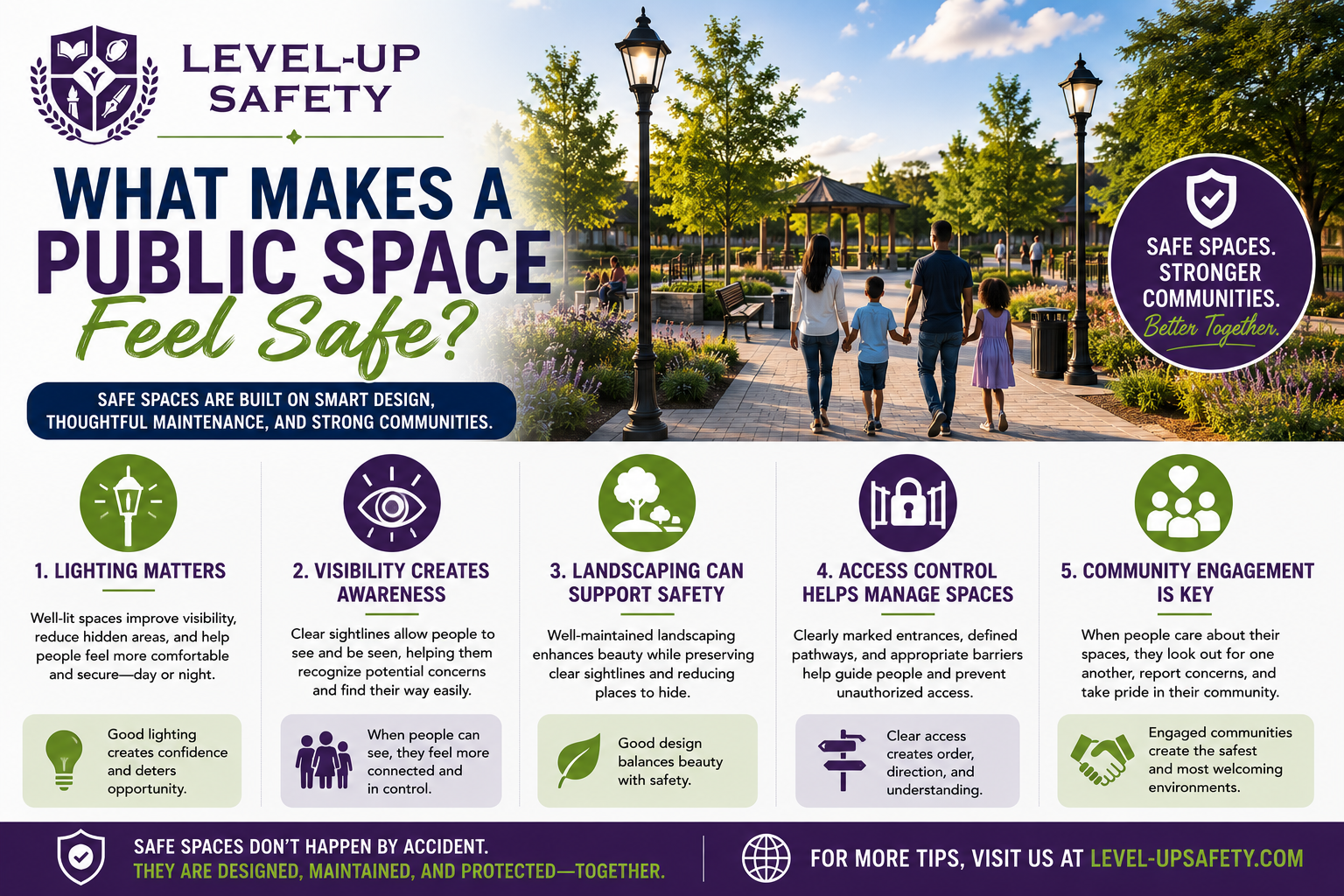
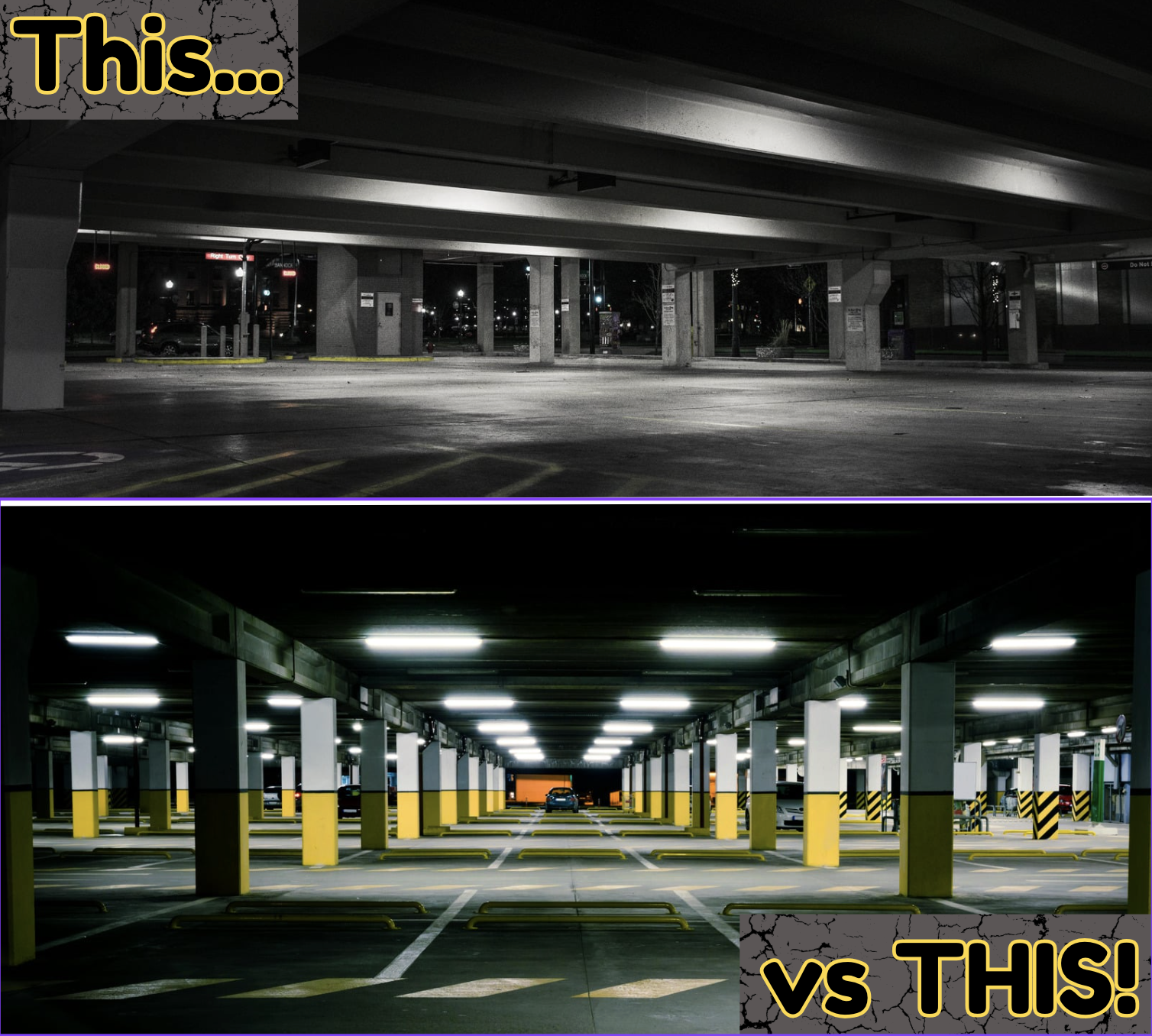
Lighting Matters
Well-lit spaces improve visibility and help people feel more comfortable. Lighting is such a significant safety asset that it’s used to deters crime and nefarious activity.
Good lighting:
- Reduces hidden areas
- Improves visibility for visitors
- Supports natural observation by others
- Increases confidence when using public spaces after dark
A well-lit environment feels more welcoming and secure. That much is clear.
Visibility Creates Awareness
With that said, people are also generally safer when they can easily see and be seen.
Open sightlines allow visitors to:
- Identify exits
- Observe activity around them
- Recognize potential concerns early
- Be more aware of surroundings
When visibility is limited, uncertainty and the potential for questionable activity often increases.
Landscaping Can Support Safety
Trees, shrubs, and decorative features enhance public spaces, but they have to be maintained thoughtfully.
Proper landscaping helps:
- Preserve clear sightlines
- Reduce hidden areas
- Improve natural observation
- Create inviting environments without limiting visibility
Good design balances beauty with safety. Sometimes this is easier said than done but with this concept in mind, start to notice where large, overbearing bushes hide areas that should be clear and open. For example, if the main windows of an entrance are hidden and visibility out to the parking lot is limited or blocked by shrubs, that could lead to a delay in noticing when danger approaches. Conversely, if the sightline is clear, the personnel near those main windows will have as much notice as possible when danger is close and will be able to take appropriate measures to enact emergency plans.
Access Control Helps Manage Spaces
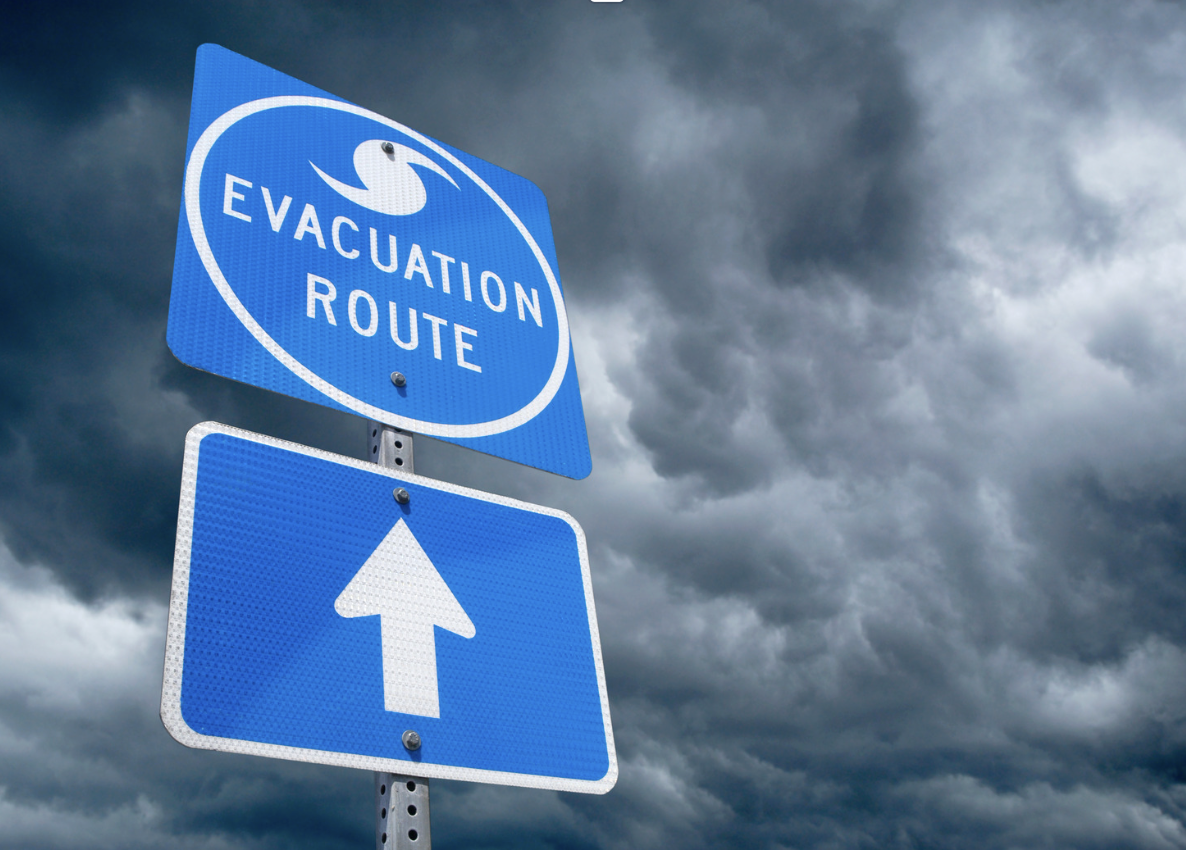
Not every safety measure involves locks and barriers, although those are super important. Markings, signs, and clear paths are all part of creating clear access control mechanisms too.
Effective access control may include:
- Clearly marked entrances
- Appropriate fencing
- Defined pathways
- Visitor information signage
These features help people understand where they should go and how to move through a space safely. I’m willing to bet that you’ve encountered places in your travels that were poorly marked causing you to wander around unsupervised or even get completely lost. I know I have.
Community Engagement Is the Most Important Factor
Perhaps the strongest contributor to safety is community involvement.
When people feel connected to a space, they are more likely to:
- Report concerns
- Look out for one another
- Respect their environment
- Take pride in maintaining the area
Safe communities are built not only through design but through relationships.
Safety Is Often Found in the Details
The safest public spaces are not necessarily the ones with the most security features. Security and hardening help but they’re not the end all. The safest spaces are thoughtfully designed, well-maintained, and supported by engaged community members also.
When lighting, visibility, access, and community come together, public spaces become places where people can gather, connect, and thrive with confidence.